


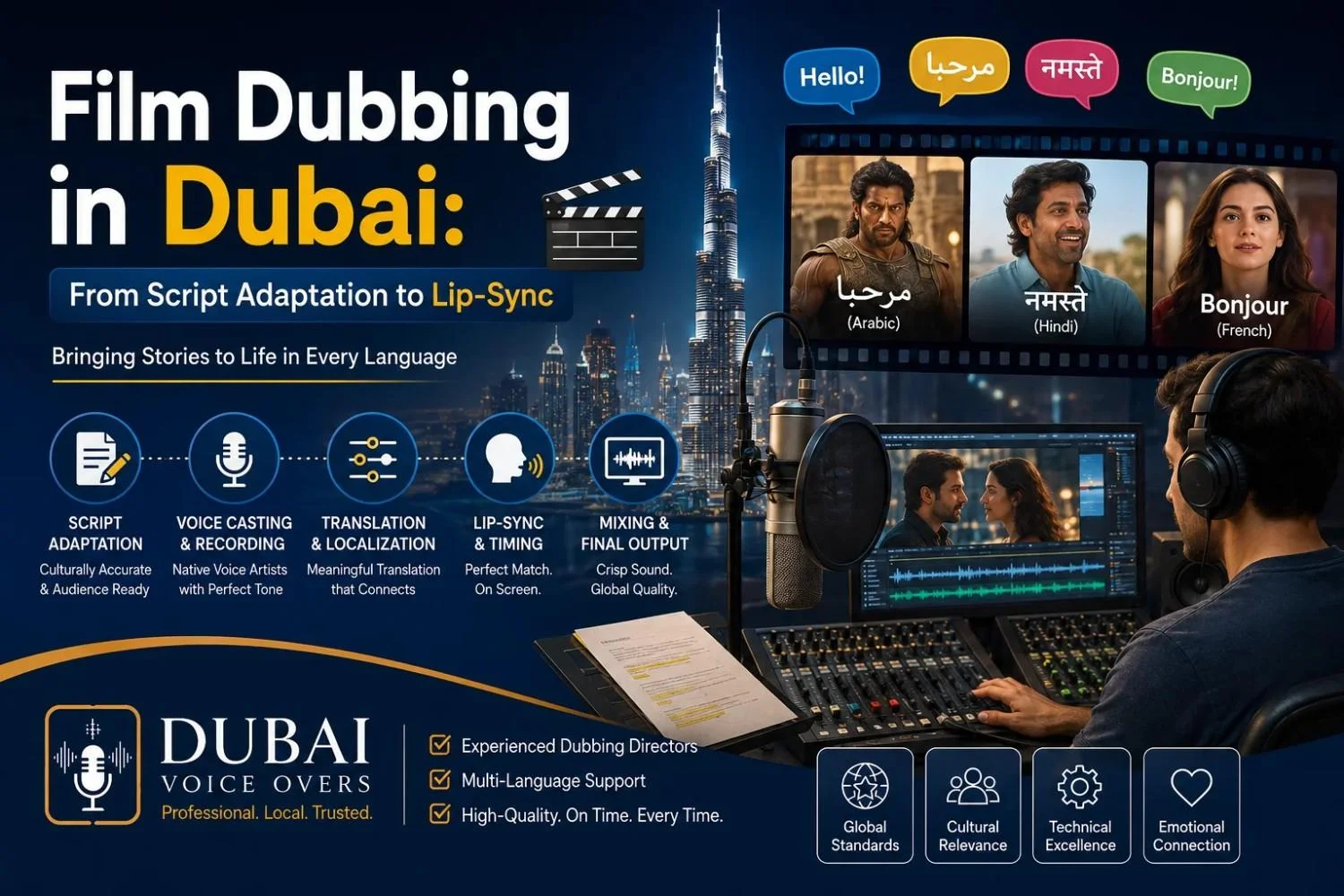



Film Dubbing in Dubai delivers professional localized voice performances with accurate script adaptation, natural dialogue, and precise lip-sync for films and video content. A film that plays perfectly in its original language can fall flat the moment it’s handed a poor dub. Film dubbing services in Dubai exist to solve a genuinely hard problem: replacing an actor’s original performance with a new one, in a different language, that still feels believable, emotionally accurate, and synchronized to the same face on screen.
Dubbing vs. Subtitling: Why Producers Choose Dubbing
Subtitling is cheaper and faster, but dubbing wins when:
- The target audience strongly prefers listening over reading, which is common across much of the Arabic-speaking and South Asian markets UAE distributors serve
- The content is aimed at children or general audiences who don’t want to split attention between reading and watching
- Full immersion matters more than budget, as with theatrical releases, premium streaming content, or prestige documentaries
- Accessibility is a priority — dubbed content reaches audiences with limited literacy or visual impairments that subtitles can’t serve
For UAE distributors and production companies working across MENA and South Asian markets simultaneously, dubbing is often the difference between a title that gets watched and one that gets skipped.Choosing between the two often comes down to the same trade-offs covered in our guide on how much a voice over costs in Dubai, since dubbing budgets scale differently than subtitling ones.
What Film Dubbing Actually Involves
Feature-length dubbing is a multi-stage production process, not a single recording session:
- Script translation and adaptation— dialogue is translated, then rewritten so each line matches the length, rhythm, and mouth movements of the original performance closely enough to feel natural, not just accurate.This stage relies on the same fundamentals we cover in how to write a voice over script that actually sounds natural.
- Casting— voice actors are chosen to match the age, tone, and emotional range of each on-screen actor, sometimes through auditions against specific scenes
- Directed studio sessions— a dubbing director guides actors scene by scene, referencing the original performance for emotional cues, pacing, and delivery
- ADR-style lip-sync recording— actors record while watching the scene, adjusting timing take by take until dialogue matches lip movement as closely as possible
- Sound editing and mixing— dubbed dialogue is blended back into the film’s existing music and sound effects, matched for room tone and levels so it doesn’t sound obviously separate from the rest of the audio
Languages Most Requested for UAE Film Dubbing
Dubai’s role as a regional distribution and production hub means film dubbing projects here typically target:
- Arabic(Modern Standard Arabic for broad reach, or Khaleeji/Gulf-accented for GCC-specific releases)
- Hindi, for content distributed to South Asian communities across the UAE and wider Gulf
- French and Chinese, increasingly requested for co-productions and luxury or tourism-focused content aimed at broader international audiences passing through or investing in Dubai
What Separates Good Film Dubbing From Mediocre Dubbing
Audiences notice bad dubbing even when they can’t name exactly why. The usual culprits are:
- Flat, under-directed performancesthat technically match the timing but carry none of the original actor’s emotional intensity
- Literal translationthat produces stilted, unnatural-sounding dialogue, especially with idioms or humor that don’t translate directly
- Poor lip-sync, where dialogue clearly runs longer or shorter than the mouth movement on screen
- Inconsistent audio mixing, where dubbed dialogue sounds noticeably different in tone or clarity from the film’s original sound design
Good dubbing, by contrast, is largely invisible — the audience simply experiences the story, without their attention snagging on mismatched audio.
What to Ask a Dubbing Studio Before Committing
- Can they show a portfolio of full-length film or documentary dubbing work, not just short-form ads or corporate videos?
- Do they direct actors live against picture, or record dialogue “blind” from a script alone?
- How do they handle cultural adaptation — jokes, references, and idioms — versus literal translation?
- What’s their process for final audio mixing and matching to the original sound design?
A Realistic Timeline
Full-length film dubbing is a longer project than most voice-over work — expect script adaptation alone to take one to two weeks for a feature, followed by several days of directed recording per language, and further time for mixing and QA. Documentaries with heavier narration and lighter dialogue-matching requirements can move faster than dramatic features with extensive dialogue.
Frequently Asked Questions
Is dubbing better than subtitling for films distributed in the UAE?
It depends on the audience. Dubbing generally performs better for children’s content, general-audience films, and markets that prefer listening over reading. Subtitling remains cheaper and preferred for cinephile or festival audiences who want the original performance intact.
How long does it take to dub a full-length film?
Script adaptation for a feature typically takes one to two weeks, followed by several days of directed recording per language, plus additional time for sound mixing and quality review. Documentaries with lighter dialogue often move faster.
What’s ADR-style recording in the context of dubbing?
It refers to recording dialogue while actors watch the actual scene, adjusting timing and delivery take-by-take until the new-language dialogue matches the original lip movements as closely as possible.
Can one studio handle dubbing into multiple languages for the same film?
Yes, and it’s usually preferable — a single studio managing Arabic, Hindi, and other target languages keeps casting quality, technical standards, and delivery timelines consistent across versions.
How is dubbing quality actually evaluated before final delivery?
Reputable studios review dubbed dialogue against the picture for lip-sync accuracy, check translation and cultural adaptation with native-language reviewers, and confirm the final audio mix matches the original film’s sound design and levels.
Getting Started
If you’re distributing a film, documentary, or series into Arabic, Hindi, or other regional-language markets from Dubai, request a short dubbed scene sample before committing to a full project — it’s the fastest way to judge casting fit, translation quality, and sync accuracy.
Have a film or documentary that needs professional dubbing? Contact us to discuss languages, casting, and turnaround for your project.