


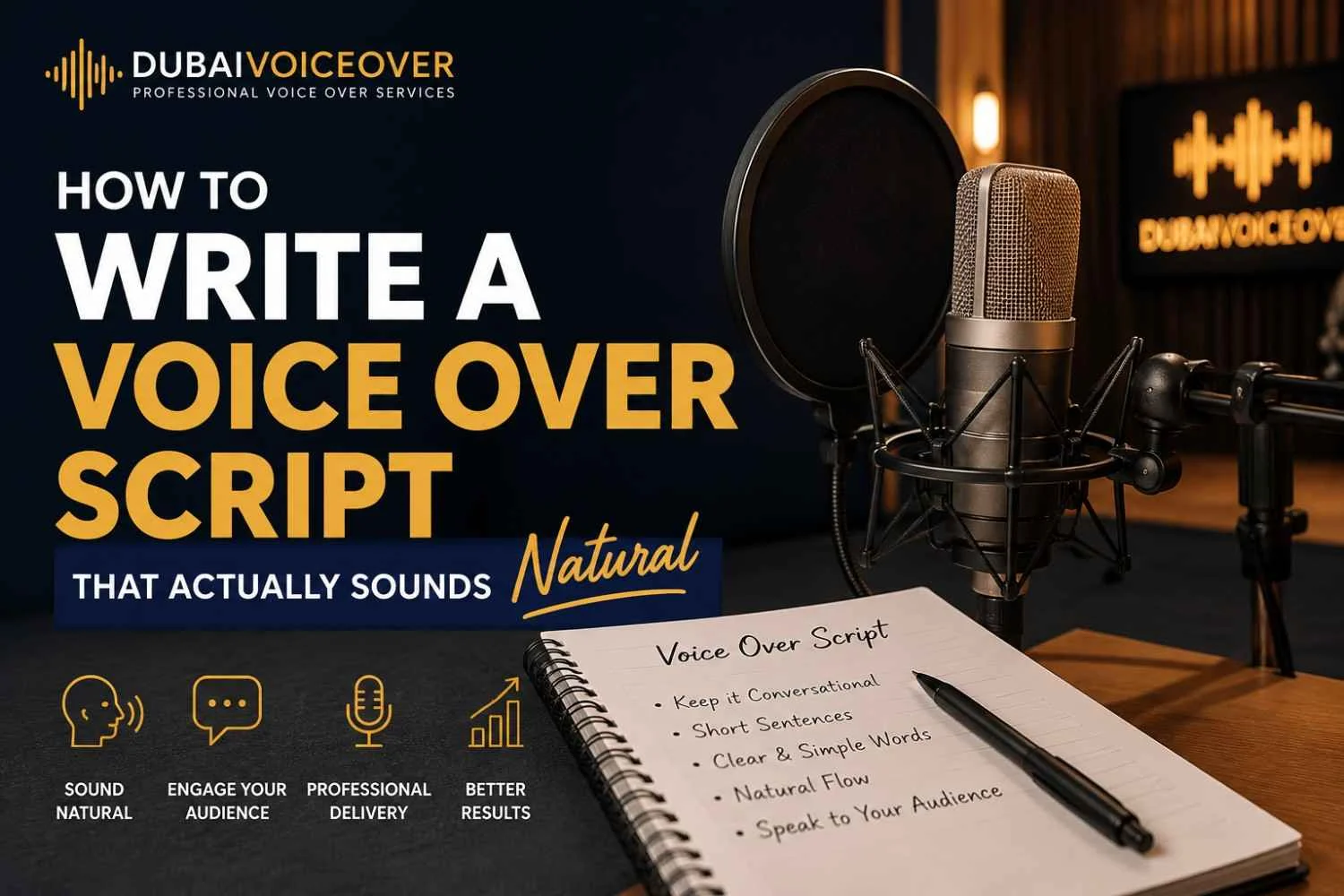



A well-written voice over script is the single biggest factor in how natural a recording sounds — even a great voice artist can only do so much with a script that wasn’t written to be spoken. If you’ve ever sat in a session and heard a talented narrator stumble over the same sentence three times, the problem usually isn’t the delivery — it’s the writing. Before you book a voice over studio in Dubai, it’s worth spending an extra hour on the script itself. It’s the cheapest way to improve your final recording, and it also shortens your session, which matters if you’re paying by the finished minute.
Here’s what actually makes a script easy to read aloud — and easy to listen to
Write for the Ear, Not the Eye
Scripts written like reports or web copy are full of long, clause-heavy sentences that work fine on a page but fall apart out loud. Read every line out loud yourself before sending it off. If you run out of breath, so will the artist. Short sentences. One idea per sentence. If a sentence needs a comma and a semicolon to make sense, split it into two.
This matters even more for e-learning modules and corporate narration, where listeners are absorbing new information and can’t re-read a confusing line the way they could on a slide.
2. Match the Script to the Dialect, Not Just the Language
A script translated word-for-word from English into Arabic often sounds stiff when read aloud, even if it’s grammatically correct. This is especially true for Khaleeji and Emirati dialect work, where the rhythm and vocabulary a Gulf audience expects can differ meaningfully from Modern Standard Arabic. If your project is regional, have the script localized by someone who writes in that dialect, not just translated by someone who’s fluent in it.
Mark the Pacing You Want
Voice artists can’t read your mind about where you want a pause, a beat of emphasis, or a slower, more serious tone. A few conventions that work well:
Use an ellipsis (…) or a line break to signal a natural pause
Bold or italicize the one word per sentence that should carry emphasis
Add a short bracketed note for tone shifts, e.g. [warmer, more conversational here]
This is particularly useful on longer scripts like radio ads or corporate videos, where the tone often needs to shift between an opening hook and a closing call to action.
Read Numbers, Dates, and Acronyms the Way They Should Sound
“24/7” can be read as “twenty-four seven” or “twenty-four hours, seven days a week” depending on context, and an artist will guess if you don’t specify. The same goes for phone numbers, prices, dates, and acronyms spell out exactly how you want each one voiced, especially for IVR prompts, where a misread number is a genuine customer service problem, not just a stylistic quibble.
Keep Sentences to One Breath
If you can’t say a sentence out loud in one comfortable breath, it’s too long for narration. This is one of the fastest ways to spot a script that will need editing before a recording session, and it’s a habit worth building even if you’re not the one reading it aloud.
Include Context, Not Just Copy
Before the script itself, give the artist a short brief: who’s the audience, what’s the goal of the piece, and what tone you’re going for (energetic, calm, authoritative, warm). A studio working from a two-line brief can usually nail the tone in the first take. One working from a bare script alone often needs a second pass.
A Quick Pre-Recording Checklist
Before you send your script to a studio, run through this:
- Read it aloud yourself, start to finish
- Confirm the dialect matches your target audience, not just the language
- Mark pauses, emphasis, and tone shifts
- Spell out numbers, dates, and acronyms exactly as they should be read
- Attach a one-paragraph brief on audience, goal, and tone
Getting these right won’t just make the recording sound better — it also means fewer revision rounds, which keeps your project on budget and on schedule. For more on how revisions, turnaround, and pricing usually work together, see our guide on voice over pricing in Dubai.
FrequentlyAsked Questions
Why does my script sound awkward when read aloud, even though it reads fine on
paper?
Written and spoken language follow different rhythms. Long sentences with multiple clauses are easy to scan visually but hard to say in one breath, which is why scripts need to be read aloud and edited for pacing before a recording session.
Should I write my script in English and have it translated, or write it directly in the target
dialect?
Direct, dialect-specific writing almost always sounds more natural than a word-for-word translation, especially for Khaleeji or Emirati Arabic, where rhythm and vocabulary differ from Modern Standard Arabic.
How do I mark pauses and emphasis in a script without confusing the voice artist?
Simple, consistent conventions work best: an ellipsis or line break for a pause, bold or italics on the single word that should carry emphasis, and a short bracketed note for any tone shift.
Do I need to spell out numbers and acronyms in a voice over script?
Yes. Numbers, dates, and acronyms can be read multiple ways, so specify exactly how each one should sound, particularly for IVR scripts where a misread number affects the customer experience.
What’s the one thing that most improves a voice over recording before it even starts?
A short brief on the audience, goal, and desired tone. It gives the artist context a bare script can’t, and usually reduces the number of revision rounds needed.